

Light Sensitivity: When It’s Normal and When to See an Eye Doctor

Light sensitivity is a common symptom experienced by individuals across all age groups and environmental settings. Bright sunlight, long hours on digital screens, and nighttime driving can all cause temporary eye discomfort. In many cases, these symptoms are short-term and do not interfere with daily activities.
However, when light sensitivity becomes frequent, intense, or long-lasting, it may signal an underlying eye or neurological condition. Persistent light sensitivity is often more than a simple reaction to bright environments.
In these cases, understanding the possible light sensitivity causes and knowing when to seek care can protect both your vision and your overall eye health (Doran, 2005; Digre & Brennan, 2012).
What Is Light Sensitivity (Photophobia)?
Light sensitivity, also called photophobia, refers to an abnormal light sensitivity that causes discomfort or pain in the eyes or head. Despite its name, photophobia does not mean a “fear” of light. Instead, it describes a physical reaction in which normal lighting feels unusually intense or irritating (Digre & Brennan, 2012).
Medical researchers define photophobia as a sensory state in which light produces discomfort, pain, or avoidance behavior. This response can range from mild irritation to severe pain that limits daily activities.
As a photophobia eye condition, light sensitivity is best understood as a symptom rather than a diagnosis. It often reflects another problem affecting the eyes or nervous system.
Get clarity on your light sensitivity. Contact Us or Schedule an Eye Exam.
When Light Sensitivity Is Considered Normal
Not all light sensitivity is cause for concern. Temporary discomfort in bright environments is common and often harmless. For example, light sensitivity from screens may develop after prolonged computer or phone use. Blue light exposure, reduced blinking, and eye fatigue can all contribute to short-term sensitivity.
Other normal situations that may cause temporary light sensitivity include:
Moving from a dark room into bright sunlight
Spending time in dry or windy environments
Seasonal changes in daylight exposure
General eye strain or fatigue
Research shows that individual tolerance for light varies widely. Seasonal changes, adaptation to darkness, and total light exposure can all influence how sensitive someone feels (Doran, 2005).
Studies also demonstrate that non-image-forming light pathways are especially responsive to blue wavelengths, which are common in LED lighting and digital screens (Daneault et al., 2016). This heightened sensitivity to blue light may contribute to light sensitivity from screens, particularly during prolonged exposure.
When sensitivity improves with rest, blinking, or reduced screen time, it is usually not a sign of serious disease.
Common Eye Conditions That Cause Light Sensitivity
When light sensitivity becomes persistent, it is often linked to an underlying eye condition. Many disorders affecting the ocular surface or internal eye structures can trigger photophobia.
Common eye-related light sensitivity causes include:
Uveitis and iritis
Corneal injuries or infections
Corneal dystrophies
Retinal disorders
Blepharospasm (involuntary eyelid spasms)
The American Academy of Ophthalmology reports that conditions such as corneal disease and inflammation frequently produce photophobia (Doran, 2005). Similarly, clinical research shows that photophobia is a hallmark symptom in several primary eye diseases and retinal disorders (Digre & Brennan, 2012).
Because photophobia can arise from many different sources, accurate diagnosis is essential in order to receive effective treatment.
Can Dry Eye Cause Light Sensitivity?
Yes, dry eye disease is a common contributor to light sensitivity. When the tear film is unstable or insufficient, the surface of the eye becomes irritated and inflamed. This irritation can expose sensitive nerve endings in the cornea, making light feel uncomfortable or painful.
Studies indicate that dry eye is frequently associated with photophobia and ocular surface discomfort (Doran, 2005). In clinical practice, light sensitivity and dry eye often occur together, especially in patients who spend long hours on digital devices.
Light sensitivity from screens can worsen dry eye symptoms by reducing blink rate and increasing tear evaporation. Over time, this cycle may lead to persistent light sensitivity that does not improve with rest alone.
For patients experiencing both dryness and light sensitivity, addressing tear film stability is often an important part of treatment.
Light Sensitivity vs. Migraines or Neurological Issues
Not all photophobia originates in the eyes. Many neurological conditions, particularly migraines, are strongly associated with light sensitivity.
Research shows that approximately 80 percent of people with migraines experience photophobia as part of their symptoms (Doran, 2005). In fact, light sensitivity is included in the diagnostic criteria for migraine disorders (Digre & Brennan, 2012).
Neurological photophobia is believed to involve the trigeminal nerve system, which transmits sensory signals from the eyes, face, and head to the brain. Studies suggest that this pathway plays a major role in light-induced discomfort (Doran, 2005).
People with migraine-related photophobia often report increased sensitivity to sound, motion, and visual patterns in addition to light. This broader sensory sensitivity helps distinguish neurological causes from purely ocular ones.
How Eye Exams Help Diagnose Light Sensitivity
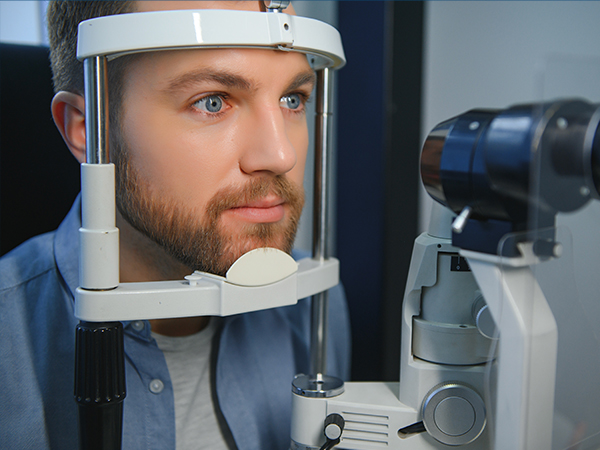
Because photophobia has many possible causes, a comprehensive eye exam is one of the most important steps in diagnosis. A thorough light sensitivity eye exam allows an optometrist or ophthalmologist to evaluate both the ocular surface and internal structures of the eye.
During an exam, your doctor may assess:
Tear film quality and stability
Corneal health
Signs of inflammation
Eyelid function
Retinal and optic nerve health
Visual acuity and refraction
Clinical guidelines emphasize that diagnosing photophobia requires careful evaluation and attention to patient history (Digre & Brennan, 2012). The American Academy of Ophthalmology also notes that identifying and treating the underlying condition is the key to managing light sensitivity effectively (Doran, 2005).
Because light affects both classical visual pathways and non-image-forming brain circuits, evaluation may consider how different lighting environments influence symptoms (Daneault et al., 2016). This broader understanding of light-sensitive brain pathways helps guide personalized recommendations.
When needed, eye doctors may collaborate with neurologists or other specialists to ensure an accurate diagnosis.
When Should You See an Eye Doctor for Photophobia?
While occasional sensitivity is normal, certain warning signs indicate the need for professional evaluation. Knowing when to see an eye doctor for light sensitivity can help prevent long-term discomfort and vision problems.
You should consider scheduling an eye exam if you experience:
Persistent light sensitivity lasting weeks or months
Increasing discomfort over time
Sensitivity that interferes with work or daily activities
Headaches or visual disturbances with light exposure
Eye redness, pain, or excessive tearing
Needing dark environments to function comfortably
Medical experts emphasize that photophobia is a real symptom that should be taken seriously and not dismissed as psychological (Doran, 2005). Early evaluation allows doctors to identify treatable conditions before symptoms worsen.
Get clarity on your light sensitivity. Contact Us or Schedule an Eye Exam.
Conclusion
Light sensitivity can range from a mild, temporary inconvenience to a sign of significant eye or neurological disease. While light sensitivity from screens or environmental exposure is often harmless, persistent light sensitivity deserves careful attention.
Research shows that photophobia is associated with many ophthalmic and neurological disorders and requires individualized evaluation and management (Doran, 2005; Digre & Brennan, 2012). A comprehensive light sensitivity eye exam can help identify the underlying cause and guide effective treatment.
If you are unsure whether your symptoms are normal, contact our experienced team at Eyes for Life. We can help provide clarity, reassurance, and personalized care. A comprehensive evaluation can help identify the underlying cause of your light sensitivity and create a treatment plan designed to protect your long-term vision and comfort.
Refrences
Daneault, V., Dumont, M., Massé, É., Vandewalle, G., & Carrier, J. (2016). Light-sensitive brain pathways and aging. Frontiers in Aging Neuroscience, 8, 32. https://doi.org/10.3389/fnagi.2016.00032
Digre, K. B., & Brennan, K. C. (2012). Shedding light on photophobia. Journal of Neuro-Ophthalmology, 32(1), 68–81. https://doi.org/10.1097/WNO.0b013e3182474548
Doran, M. (2005, November). Photophobia: Looking for causes and solutions. EyeNet Magazine, American Academy of Ophthalmology.https://www.aao.org/eyenet/article/photophobia-looking-causes-solutions

Contact Info
Office Address: 412 E. 30th Ave
Spokane, WA 99203
Spokane, WA 99203
Call Or Text(509) 448-7300
Office Hours
- Monday 8:10am - 5:30pm
- Tuesday 8:10am - 6:00pm
- Wednesday 9:30am - 6:00pm
- Thursday 8:10am - 6:00pm
- Friday 8:10am - 5:00pm
- Saturday Closed
- Sunday Closed
© 2026 Eyes For Life . All rights Reserved. Accessibility Statement - Privacy Policy - Sitemap
Powered by:
